Why Healthcare Software Is at a Turning Point
See Contents
- 1 Why Healthcare Software Is at a Turning Point
- 2 1. Artificial Intelligence and Machine Learning in Clinical Workflows
- 3 2. Telehealth and Virtual Care Platforms
- 4 3. Electronic Health Records and Interoperability
- 5 4. Internet of Medical Things (IoMT) and Remote Patient Monitoring
- 6 5. Healthcare Cybersecurity and Data Protection
- 7 6. Big Data Analytics and Population Health Management
- 8 7. Blockchain in Healthcare Data Exchange
- 9 8. Clinical Decision Support and AI Diagnostics
- 10 9. Mental Health and Behavioral Health Software
- 11 10. Voice Technology, NLP, and Ambient Intelligence
- 12 11. Low-Code and No-Code Healthcare Application Development
- 13 12. Healthcare Software and Environmental Sustainability
- 14 Key Challenges Facing Trending Solutions in Healthcare Software Development
- 15 Conclusion: Investing in the Right Healthcare Software Trends
The healthcare industry has never been under more pressure, and never been more capable. Aging global populations, a persistent shortage of clinical staff, skyrocketing operational costs, and patient demand for convenient, connected care are converging at a single point: the software that runs the healthcare system.
Healthcare software has undergone a profound transformation. It is no longer simply a tool to record information or manage scheduling. Today’s digital health platforms serve as the backbone of clinical decision-making, patient engagement, operational efficiency, and even predictive care. According to Orangesoft, the health tech market size is projected to grow from $354 billion in 2025 to over $981 billion by 2032, a reflection of how deeply technology has become woven into every layer of care delivery.
This article takes a thorough look at the trending solutions in healthcare software development that are shaping both the present and the near future. Each trend is examined with supporting market data, real-world applications, and an honest look at the challenges that come alongside the opportunity. Whether you are a healthcare provider, a software developer, a health tech investor, or simply someone interested in where the industry is heading, this guide is designed to give you a clear, detailed, and evidence-based picture.
1. Artificial Intelligence and Machine Learning in Clinical Workflows
Of all the trending solutions in healthcare, artificial intelligence (AI) is arguably the most transformational. AI has moved well beyond the realm of proof-of-concept experimentation and is now deeply embedded in clinical workflows, administrative processes, diagnostics, and patient communication.
According to Markets and Markets, the global healthcare IT market was valued at $368.15 billion in 2023 and is projected to grow at a compound annual growth rate (CAGR) of 14.7%, reaching $834.35 billion by 2029. Much of this growth is driven by the accelerating adoption of AI-powered systems across the care continuum.
The practical applications of AI in healthcare software development are remarkably broad. AI-based diagnostic tools are helping physicians detect conditions, including cancer, cardiovascular disease, and diabetic retinopathy, with greater speed and accuracy. Machine learning models analyze imaging data, pathology slides, and genomic sequences to identify patterns that a human clinician might miss under time pressure or limited resources.
One of the most rapidly adopted AI innovations is ambient clinical documentation. These tools listen to physician-patient conversations in real time and automatically generate structured clinical notes, referrals, and follow-up instructions. According to Orangesoft, ambient AI tools free clinicians from the burden of extensive note-taking and deliver time savings of approximately 41%. Given that clinicians routinely spend 35% of their working time on documentation alone, this represents a meaningful reclamation of capacity that can be redirected toward direct patient care.
Intelligent scheduling systems enabled by AI are also delivering measurable efficiency gains. According to the same source, AI-driven scheduling yields an average increase of 5–10% in physician utilization — a significant figure at a time when clinician burnout is widespread and workforce shortages are acute.
McKinsey has estimated that AI-driven healthcare solutions stand to create $100 billion in annual value across the healthcare industry — not as a distant forecast, but as an increasingly achievable near-term outcome based on already-deployed capabilities.
On the pharmaceutical side, generative AI is accelerating drug discovery and development in ways that were unimaginable a decade ago. As noted by Ulam.io, generative AI is now being used to design novel compounds and predict molecular interactions in a fraction of the time previously required, driving down research costs and compressing innovation cycles.
However, responsible deployment of AI in healthcare software is not optional. Transparency, explainability, and bias mitigation are now critical requirements. Regulatory bodies globally are developing new frameworks to ensure AI tools are validated, auditable, and safe. Any healthcare software development company building AI solutions must treat these governance requirements as foundational, not as afterthoughts.

2. Telehealth and Virtual Care Platforms
Telehealth is one of the most visible trending solutions in healthcare and arguably the one that patients have experienced most directly. What began during the COVID-19 pandemic as an emergency workaround has since become a permanent pillar of care delivery.
According to Precedence Research, the telehealth market alone is valued at $196.81 billion in 2025 and is growing at a CAGR of 22.55% — among the fastest growth rates of any segment within healthcare IT. Another projection cited by Peerbits places the global telehealth market at over $175.5 billion by 2026. Whichever projection proves more accurate, the trajectory is clear, and it is upward.
Patient preferences are driving much of this growth. According to Decode Agency, over half of patients in the United States reported increased satisfaction with their care due to telehealth and virtual care. Sixty-five percent of patients identify convenience as the primary reason they choose telehealth over in-person visits. Healthcare leaders are also firmly aligned with this direction — approximately 90% of healthcare executives say virtual and connected care will play a major role in their organizational strategy going forward.
McKinsey has projected that up to $265 billion worth of Medicare services — roughly 25% of total Medicare spending — could shift from traditional care settings to home-based care models, a shift that is fundamentally dependent on robust telehealth software infrastructure.
The next evolution of telehealth is the virtual hospital model. Rather than simple video consultations, virtual hospitals deliver complete remote care encompassing diagnostics, specialist consultations, chronic disease management, and post-operative follow-up. According to Ulam.io, adoption of virtual hospital services grew 50% year-over-year in 2025. These platforms require deep integration with electronic health records, remote monitoring devices, pharmacy management systems, and billing infrastructure to deliver a seamless, clinically valid experience.
According to the American Medical Association (AMA), 60% of physicians reported that telehealth enabled them to provide high-quality care, dispelling early concerns that virtual care was inherently inferior to in-person encounters for a broad range of conditions.
The technical demands of scaling telehealth are significant. HIPAA-compliant video platforms, end-to-end encrypted messaging, integration with scheduling and billing systems, and interoperability with electronic health record systems are all required to turn telehealth from a standalone feature into a reliable part of an organization’s care pathway.
Find details of Telemedicine vs. Telehealth.

3. Electronic Health Records and Interoperability
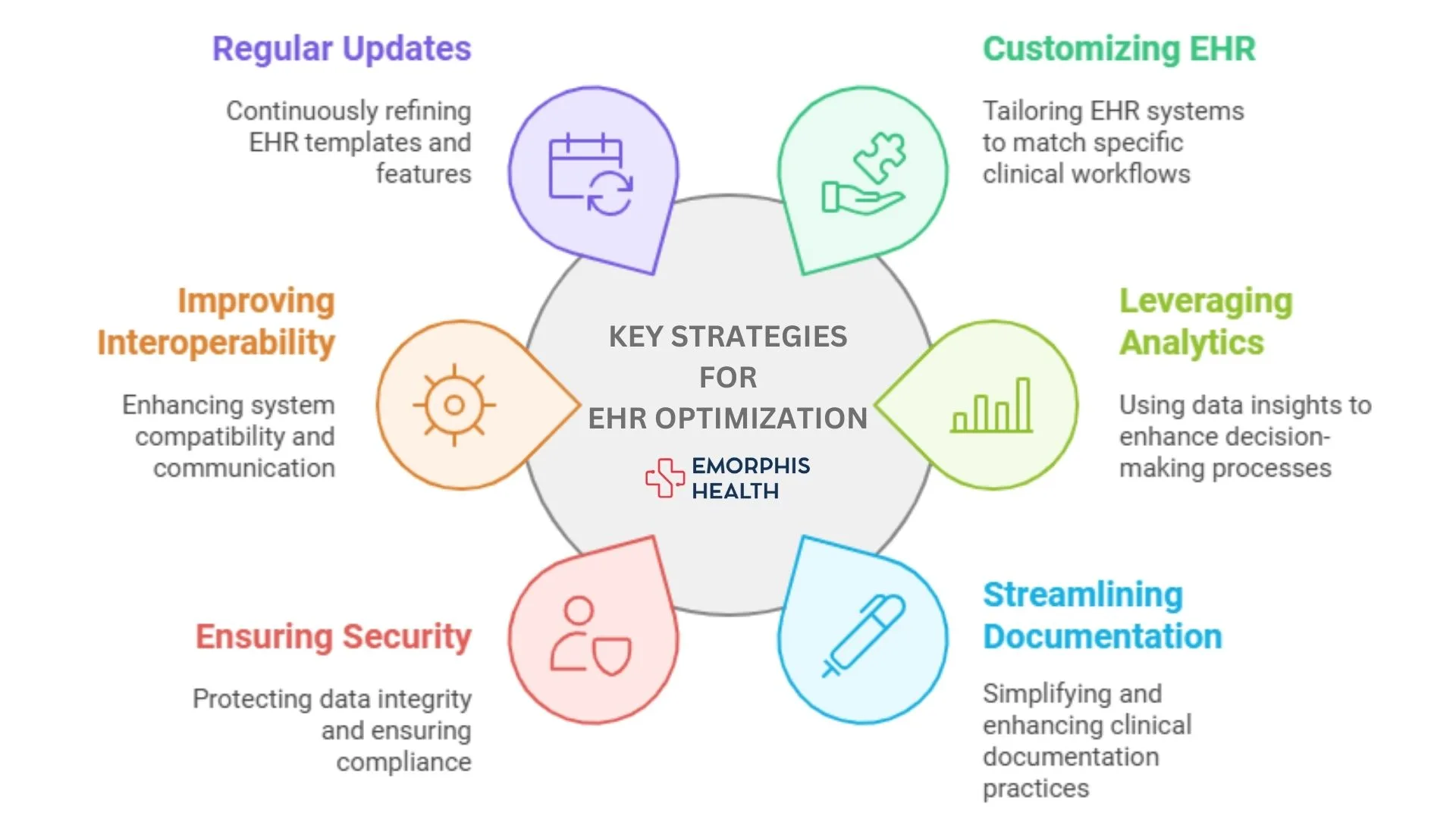
Electronic health records (EHRs) remain the digital backbone of the healthcare system, and their evolution is one of the most consequential trending solutions in healthcare software development. According to Ulam.io, over 85% of healthcare organizations now operate on cloud-based EHR platforms, which offer improved scalability, multi-site access, and the ability to support predictive analytics at scale.
Despite this widespread adoption, EHRs remain a source of frustration for both clinicians and patients when they fail to communicate with each other. The problem of fragmented, siloed records is a persistent challenge. When a patient sees a specialist, visits an emergency department, or receives care from a home health agency, the relevant clinical information should transfer seamlessly. In reality, legacy systems built on older HL7 messaging frameworks are often operating alongside newer FHIR-based APIs, creating hybrid environments where old and new technologies must coexist.
Interoperability has therefore become not just a technical priority but a regulatory mandate. Government bodies and healthcare regulators are increasingly requiring healthcare software to comply with strict data-sharing standards that eliminate information silos. The goal is a healthcare ecosystem where patient data flows freely and securely between hospitals, laboratories, insurers, pharmacies, and digital health applications.
When EHR interoperability fails, the consequences are clinical and financial. As noted by LTC News, poor integration between systems results in increased hospital readmissions, multiplied billing errors, and administrative burdens that ultimately fall on patients and families. Conversely, when interoperability is achieved, care transitions become smoother, outcomes improve, and operational costs decline.
Cloud migration is also reshaping the EHR landscape. Cloud-based EHR platforms are growing at a projected CAGR of 16.66% between 2025 and 2030, driven by organizations seeking scalability, disaster recovery capabilities, and the ability to support integrated analytics without the overhead of on-premises infrastructure.
The most forward-looking EHR systems in 2025 and 2026 are incorporating AI-powered clinical decision support, predictive population health analytics, and ambient documentation tools directly into the clinical workflow — transforming the EHR from a passive data repository into an active participant in care delivery.
Find details on EHR optimization strategies.
4. Internet of Medical Things (IoMT) and Remote Patient Monitoring
Wearable health technology has entered the mainstream, and its integration with clinical care systems represents one of the most practically impactful trending solutions in healthcare. Smartwatches, biosensor patches, continuous glucose monitors, connected blood pressure cuffs, pulse oximeters, and implantable devices are all generating streams of real-time health data outside the hospital environment.
According to Decode Agency, globally, over one billion wearables are expected to be in active use by 2025. The wearable medical device market specifically is projected to grow from $45 billion in 2024 to $151.8 billion by the end of 2029 — more than tripling in value in five years.
The broader Internet of Medical Things market is even more expansive. According to Fortune Business Insights, the IoMT market is expected to reach $814.28 billion by 2032, reflecting a massive shift toward intelligent, connected healthcare that extends from the hospital bed to the patient’s home.
Remote patient monitoring (RPM) programs built on IoMT data are becoming essential infrastructure for managing chronic conditions. Physicians are strongly supportive of this shift — 88% say they want patients to track key health statistics at home, according to Decode Agency. When patients with heart failure, diabetes, hypertension, or respiratory conditions are monitored continuously, clinical teams can detect deterioration early, intervene proactively, and prevent costly emergency hospitalizations.
For healthcare software developers, IoMT integration requires solving complex technical problems. Devices must be able to communicate using standardized protocols, data must be validated and cleaned before it enters clinical systems, alert logic must be configured carefully to avoid alarm fatigue, and privacy protections must be robust. Building RPM capabilities that are clinically trusted and operationally sustainable requires both deep healthcare domain knowledge and sophisticated engineering.
5G network infrastructure is further accelerating IoMT capabilities. The ultra-low latency and high bandwidth of 5G allow for richer, faster data transmission from medical devices — enabling applications like real-time surgical robotics, high-definition remote diagnostic imaging, and instantaneous biosignal streaming that were technically constrained under 4G networks.
5. Healthcare Cybersecurity and Data Protection
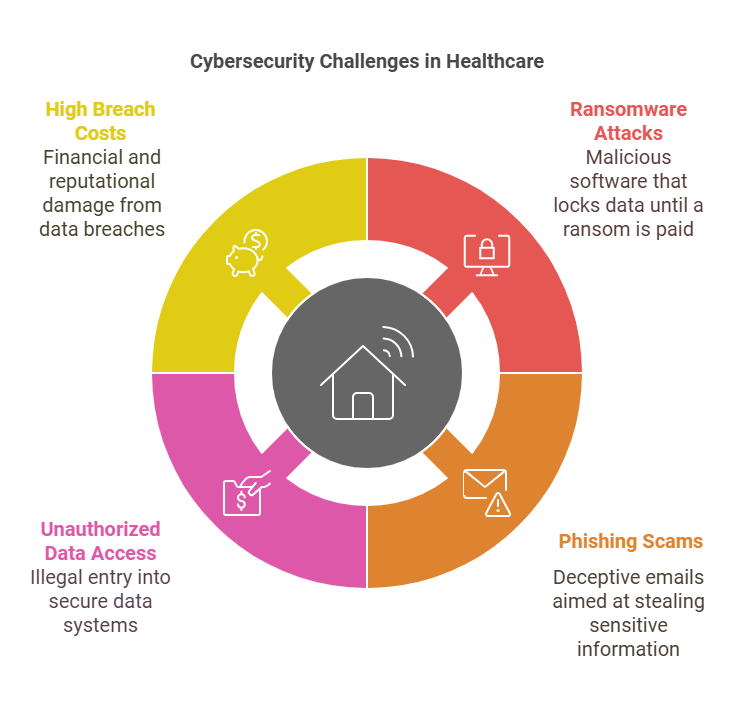
No examination of trending solutions in healthcare software development would be complete without an honest and thorough treatment of cybersecurity. The healthcare sector is one of the most persistently targeted industries for cyberattacks, and the stakes of a breach extend far beyond financial loss — they directly threaten patient safety and the continuity of critical care.
According to the HIPAA Journal, more than 700 large healthcare data breaches affecting 500 or more individuals are reported to the U.S. Department of Health and Human Services (HHS) Office for Civil Rights (OCR) each year. In 2025 specifically, at least 642 data breaches were confirmed as of December 31, affecting approximately 57 million individuals.
The financial consequences of these breaches are severe. According to HIPAA Journal data cited by Cobalt, healthcare breaches cost organizations an average of $7.42 million per incident, making healthcare the most financially impacted industry by cyberattacks. On a per-record basis, healthcare breaches average $398, compared to $148 per record across other industries. IBM’s 2024 Cost of a Data Breach Report found that phishing-related breaches specifically cost an average of $9.77 million per incident in the healthcare sector.
According to the 2025 Verizon Data Breach Investigations Report, the healthcare sector experienced 1,710 security incidents in the period covered, resulting in 1,542 confirmed data disclosures. The American Hospital Association (AHA) noted that as of October 2025, 364 hacking incidents had been reported to HHS-OCR, affecting over 33 million Americans in that year alone.
A critical finding from the AHA’s cybersecurity analysis underscores the nature of the threat: over 80% of stolen protected health information records were taken not from hospitals directly, but from third-party vendors, software service providers, and business associates. Over 90% of hacked health records were stolen from outside the EHR system, and 100% of hacked data was not encrypted at the point of compromise — either due to stolen credentials or data being stored in an unencrypted format outside the primary EHR.
The attack patterns are also evolving. Security expert Dave Bailey of Clearwater has noted a clear shift from opportunistic attacks to highly coordinated, multi-stage operations, with attackers increasingly using AI-enabled techniques that compress the time between initial access and full system compromise.
In response to this landscape, nearly 9 in 10 healthcare organizations plan to incorporate AI tools into their cybersecurity strategy, according to the Cyber Risk Alliance. Threat intelligence is the most widely adopted AI application for cybersecurity within healthcare, followed by data analytics and risk assessment tools.
Despite this awareness, significant gaps remain. According to Veriti data cited by Cobalt, 50% of healthcare organizations lack confidence in their ability to detect and manage data breaches. Approximately 42% have no policies governing unauthorized data access, and 51% lack the technology to prevent data breaches. These figures highlight the gap between cybersecurity intent and cybersecurity capability within the sector.
Modern healthcare software development addresses these vulnerabilities by embedding security architecture into the development process itself. This means end-to-end data encryption, role-based access control, multi-factor authentication, anomaly detection systems, comprehensive audit trails, and regular penetration testing. Compliance with frameworks including HIPAA in the United States, GDPR in Europe, and equivalent regulations in other jurisdictions is no longer treated as a legal checkbox; it is a fundamental design requirement.
Find details on Managed Security Service Providers.
6. Big Data Analytics and Population Health Management
Healthcare systems generate enormous volumes of data every day, from patient records, imaging studies, laboratory results, wearable sensors, insurance claims, and pharmacy dispensing logs. For much of healthcare history, this data was collected but not systematically leveraged. That is rapidly changing.
Big data analytics in healthcare enables clinical and operational leaders to convert raw data into actionable intelligence. It supports risk stratification of patient populations, early identification of disease patterns, optimization of clinical pathways, and evidence-based resource allocation. According to Precedence Research, the big data analytics market in healthcare is expected to reach $327.57 billion by 2034, driven by the growing demand for data-driven healthcare decision-making.
Population health management platforms are one of the most consequential applications of healthcare analytics. By analyzing aggregated patient data, these systems help health systems identify high-risk populations before they require expensive acute care, design targeted preventive care interventions, and measure the outcomes of those interventions over time. This shift from reactive to proactive care models is one of the defining features of modern healthcare.
At the individual patient level, data analytics is enabling a new paradigm of personalized medicine. According to Statista, the global personalized medicine market was valued at $655 billion in 2024 and is projected to reach $1,104 billion by 2030 — a growth trajectory that reflects the growing clinical and commercial imperative for precision-based healthcare. Personalized medicine combines genomic data, clinical history, lifestyle information, and real-time biometric data to generate care recommendations that are tailored to an individual rather than based on population averages.
For healthcare software developers, building analytics capabilities into clinical platforms requires expertise in data engineering, privacy-preserving data architecture, visualization, and — increasingly — machine learning. The ability to turn data into actionable clinical guidance, in real time and at the point of care, is a defining characteristic of the most capable healthcare software platforms of 2025 and 2026.
7. Blockchain in Healthcare Data Exchange
Blockchain technology may be associated in the public imagination with cryptocurrency, but its properties — decentralization, immutability, transparency, and cryptographic security — make it particularly well-suited to challenges in healthcare data management. Blockchain-based healthcare solutions are an emerging but important entry among trending solutions in healthcare software.
The healthcare blockchain market reached $7.04 billion in 2023 and is projected to grow at a CAGR exceeding 63% through 2030, according to SynergyTop. This remarkable growth rate reflects the convergence of need and technical readiness.
The most compelling applications of blockchain in healthcare software include secure exchange of patient records across organizations without dependence on a central authority, verification of drug supply chain integrity to combat counterfeit pharmaceuticals, management of clinical trial data with immutable audit trails, and streamlining of insurance claims and reimbursement workflows.
For patients, blockchain can enable a genuinely patient-controlled health record — one where the individual determines who has access to which elements of their health data and can grant or revoke access in real time. This level of patient data sovereignty aligns with both regulatory trends and patient expectations around privacy and control.
While blockchain in healthcare is still maturing, forward-thinking healthcare software development organizations are already building blockchain-based interoperability frameworks. As regulatory clarity improves and standards around healthcare blockchain applications consolidate, broader adoption is expected through the late 2020s.
8. Clinical Decision Support and AI Diagnostics
Clinical decision support systems (CDSS) represent one of the most direct applications of software intelligence in the practice of medicine. These platforms assist clinicians at the point of care by surfacing relevant evidence, flagging potential drug interactions, recommending diagnostic tests based on presenting symptoms, and alerting providers to deviations from evidence-based protocols.
AI-powered CDSS is one of the leading trending solutions in healthcare software development because it addresses a genuine clinical need: the knowledge available in medicine has grown far beyond what any individual practitioner can hold in memory and apply consistently in a fast-moving clinical environment.
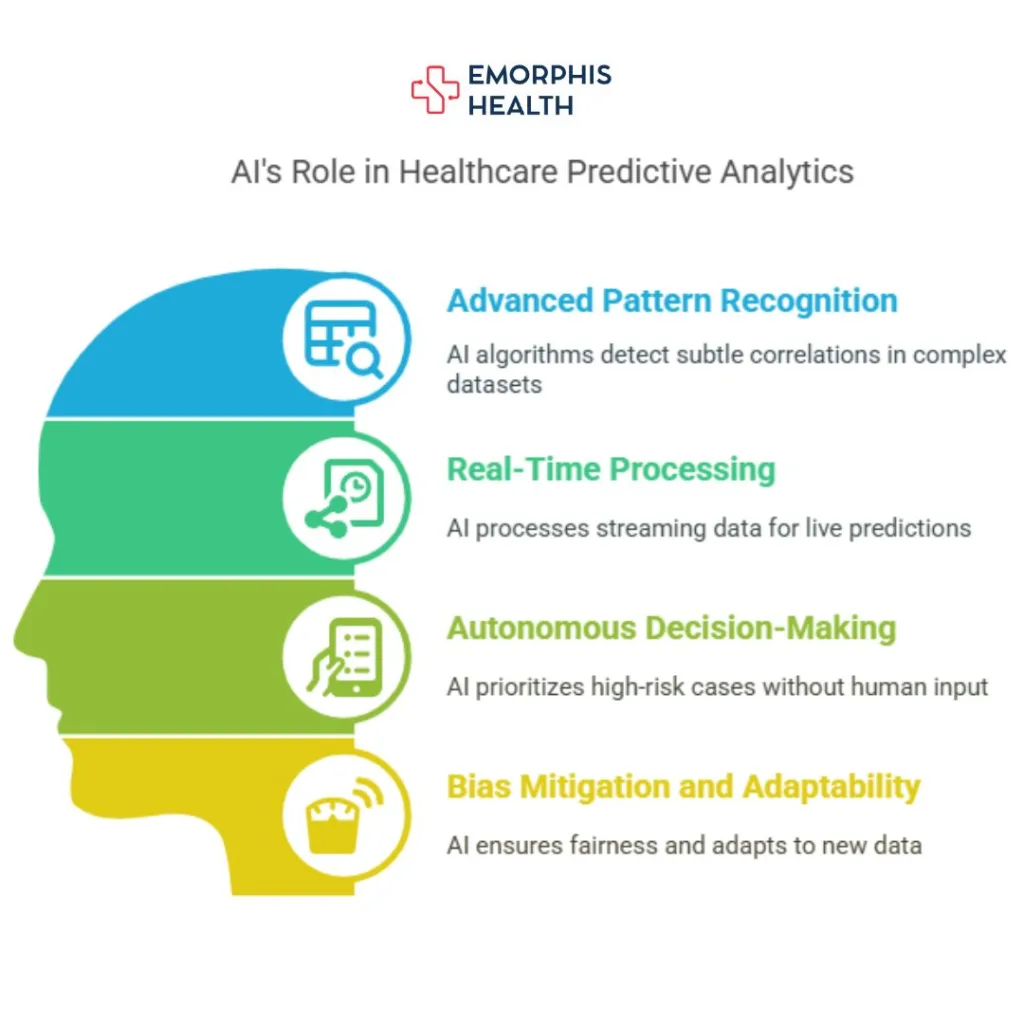
Modern CDSS platforms go well beyond simple rule-based alerts. Machine learning models trained on large clinical datasets can identify risk patterns for conditions including sepsis, acute kidney injury, heart failure decompensation, and postoperative complications, allowing care teams to intervene earlier and more decisively. Radiological AI tools that assist in reading imaging studies are already deployed at scale in many health systems, reducing reporting times and improving detection rates for conditions including lung cancer, breast cancer, and intracranial hemorrhage.
The World Health Organization has stated that digital health solutions can generate measurable health benefits of up to 15% when deployed correctly, and well-designed clinical decision support is among the most clinically validated categories of digital health intervention.
Find details on Predictive Analytics in Healthcare.
9. Mental Health and Behavioral Health Software
Mental health has emerged as one of the most dynamic segments within healthcare software development, driven by increased awareness, destigmatization, and the recognition that behavioral health is inseparable from physical health outcomes.
Digital mental health platforms range from consumer-facing wellness and therapy applications to enterprise-grade platforms for behavioral health providers, substance use disorder treatment centers, and integrated care organizations. AI is playing an important emerging role in this space: precision psychiatry tools are beginning to combine biomarkers, wearable-generated behavioral data, and natural language processing to support earlier and more accurate diagnosis and personalized treatment planning.
This is, as noted by Ulam.io, one of the most promising and socially impactful areas of healthcare software in 2026. It is also one of the most ethically sensitive — mental health data is among the most personal information a person can disclose, and software systems in this space must be designed with exceptional care for data privacy, informed consent, and protection against misuse.
Find more details on the role of technology in Mental Health Care.

10. Voice Technology, NLP, and Ambient Intelligence
Natural language processing (NLP) and voice-enabled tools are transforming how clinicians interact with healthcare software. Clinician burnout is a well-documented crisis in the healthcare system, driven in large part by documentation burdens. EHR systems designed around keyboard and mouse input have contributed substantially to the problem.
Voice-enabled clinical platforms allow physicians, nurses, and other clinicians to navigate systems, dictate notes, retrieve patient information, and issue orders through natural speech. NLP engines interpret this input and populate structured fields within EHR systems, dramatically reducing the time spent on data entry. These tools are now being deployed by major health systems globally.
According to Orangesoft, ambient AI documentation tools — which go further than basic voice dictation by autonomously listening to clinical encounters and generating structured notes — deliver time savings of approximately 41% for clinicians. The practical impact is significant: more time for patient interaction, reduced administrative stress, and better-quality documentation that is captured naturally rather than reconstructed after the fact.

11. Low-Code and No-Code Healthcare Application Development
One of the less-discussed but practically important trending solutions in healthcare is the rise of low-code and no-code development platforms tailored for healthcare organizations. These tools allow clinical staff and operational teams to participate more directly in the creation of software solutions, reducing dependence on scarce technical talent and accelerating the development cycle.
Low-code platforms enable technical teams to collaborate with clinical staff during development processes, resulting in solutions that reflect actual operational requirements rather than abstract specifications. This is particularly valuable for building workflow tools, patient engagement applications, reporting dashboards, and care coordination platforms where the subject matter experts are clinicians rather than engineers.
12. Healthcare Software and Environmental Sustainability
A newer but increasingly important dimension of healthcare software development is environmental sustainability. Healthcare systems are significant energy consumers, and digital transformation offers meaningful opportunities to reduce the sector’s carbon footprint.
Cloud optimization reduces the energy intensity of data management by concentrating compute resources in more efficiently operated data centers. Digital recordkeeping eliminates paper-based workflows that consume physical resources and storage space. Intelligent building management systems integrated with health IT platforms can optimize energy use across clinical facilities.
As healthcare organizations set sustainability targets and face regulatory pressure around environmental reporting, software that supports measurable reductions in energy consumption and waste generation is moving from a differentiator to a planning priority.

Key Challenges Facing Trending Solutions in Healthcare Software Development
Understanding the trending solutions in healthcare requires an equally clear-eyed understanding of the obstacles that slow adoption and implementation.
Interoperability gaps persist across the healthcare system. Legacy infrastructure, incompatible data standards, and vendor lock-in continue to fragment clinical data and limit the value that modern analytics platforms can deliver.
Regulatory complexity is substantial. Building software for healthcare means navigating HIPAA in the United States, GDPR in Europe, MDR for medical devices, FDA guidance for software as a medical device, and a growing body of AI-specific regulation. Compliance is not static — it requires ongoing monitoring and adaptation.
Clinician adoption remains a challenge. Sophisticated technology delivers no value if it disrupts clinical workflows or creates new burdens for already-overstretched professionals. User-centered design and proper change management are prerequisites for successful deployment.
Cybersecurity is a continuous obligation, not a project with an end date. The threat landscape evolves continuously, and healthcare organizations must invest in ongoing security capability, not just in point-in-time remediation.
Workforce shortages affect both healthcare and technology. The competition for engineers with both healthcare domain knowledge and software development capability is intense, driving organizations to consider offshore development partnerships, low-code solutions, and AI-assisted development tools.
Conclusion: Investing in the Right Healthcare Software Trends
The landscape of trending solutions in healthcare is both exciting and complex. Artificial intelligence, telehealth, IoMT, advanced analytics, interoperability, and cybersecurity are not isolated trends — they are interconnected capabilities that, when combined effectively, have the potential to fundamentally improve the quality, accessibility, and sustainability of care.
The organizations that will lead in healthcare delivery over the next decade are those that approach software investment strategically, not chasing every new technology, but developing a coherent digital health architecture that addresses their specific clinical, operational, and patient experience priorities. That means partnering with software development organizations that combine deep healthcare domain expertise with rigorous engineering capability, compliance knowledge, and a genuine commitment to the end users: the clinicians and patients whose outcomes depend on these systems working well.
Healthcare software development is no longer a back-office function. It is at the very center of what it means to deliver excellent care in the modern era.