Why This Conversation Matters More Than Ever
See Contents
- 1 Why This Conversation Matters More Than Ever
- 2 How Pharma Manufacturing Saves Lives Beyond Drug Development
- 3 Core Technology Challenges in Pharma Manufacturing Today
- 4 Technology Tools That Are Reshaping Modern Pharma Manufacturing
- 5 Regulatory Expectations Are Rising Faster Than Plant Readiness
- 6 How AI Is Transforming Technology Challenges Into Preventable Risks
- 7 Why These Gaps Persist Across the Industry
- 8 The Future of Pharma Manufacturing Depends on Closing These Gaps
- 9 Conclusion
Pharmaceutical manufacturing sits at the intersection of science, compliance, and human life. Yet despite its critical role, the industry continues to struggle with foundational technology gaps.
Industry studies consistently show that
- Over 50 percent of pharma manufacturing deviations are linked to human error or process non-adherence
- Nearly 60 percent of manufacturers still rely on partially paper-based batch records
- Quality investigations can take 30 to 90 days on average, delaying product release and increasing the risk
These numbers highlight a deeper issue. The most serious technology challenges in pharma manufacturing are no longer about innovation at the lab level. They are about execution, visibility, and decision-making on the shop floor.
This is where pharma manufacturing pain points quietly accumulate and, if left unresolved, directly impact patient safety.

How Pharma Manufacturing Saves Lives Beyond Drug Development
Pharma manufacturing saving lives is not limited to producing medicines at scale. Its true impact lies in repeatability, control, and speed of response.
Every batch produced must be identical to the last. Every operator action must follow validated procedures. Every deviation must be detected early and corrected permanently. When manufacturing systems work as intended, patients never notice. When they fail, the consequences are immediate and visible.
Technology is the silent enabler of this reliability. When technology falls short, human effort alone cannot compensate.
Core Technology Challenges in Pharma Manufacturing Today
1. Manual Execution Still Dominates Critical Operations
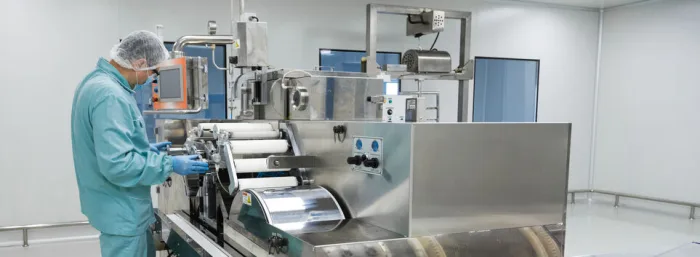
One of the most persistent pharma manufacturing pain points is the continued dependence on manual processes.
Paper batch records, handwritten logbooks, and spreadsheet-based tracking remain common across many plants. These methods introduce
- Transcription errors
- Delayed deviation detection
- Incomplete audit trails
From a patient perspective, this translates into slower batch release and higher recall risk. From a compliance perspective, it increases inspection vulnerability.
The technology challenge is not digitization alone, but real-time enforcement of correct execution.
2. Fragmented Systems Create Blind Spots
A major technology challenge in pharma manufacturing is system fragmentation.
Manufacturing execution, quality management, laboratory testing, maintenance, and training often exist in disconnected environments. Data moves manually between teams, usually during audits or investigations.
This fragmentation leads to
- Delayed root cause analysis
- Repeated deviations across sites
- Inability to assess true process risk
When systems do not speak to each other, organizations lose the ability to see patterns before they become failures.
3. Quality Systems Are Reactive, Not Predictive
Quality management is meant to protect patients. Yet in many organizations, it functions as a record-closing exercise rather than a prevention mechanism.
Deviations are logged after occurrence. CAPAs are implemented without measuring long-term effectiveness. Complaints are reviewed in isolation from manufacturing data.
This reactive approach is one of the most overlooked pharma manufacturing pain points. Without predictive insight, the same quality issues resurface under new conditions.
4. Knowledge Loss Is Undermining Consistency
Pharma manufacturing relies heavily on tacit knowledge. Senior operators and supervisors often carry critical insights that are never formally documented.
As workforce attrition increases, plants face
- Inconsistent execution by new staff
- Increased deviation frequency
- Longer training ramp-up times
Technology challenges in pharma manufacturing are no longer just system-related. They are knowledge continuity challenges.
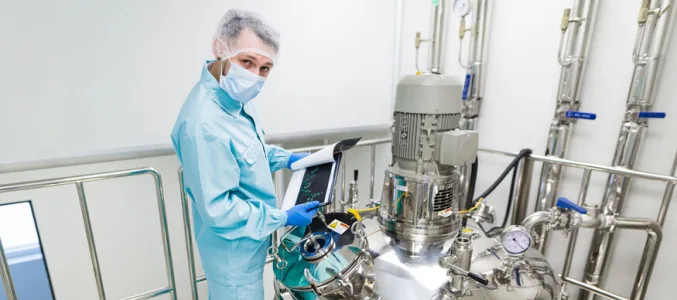
Technology Tools That Are Reshaping Modern Pharma Manufacturing
a. Advanced Manufacturing Execution Systems
Modern MES platforms go beyond digital batch records. They enforce procedural compliance step by step, validate operator actions, and capture real-time process data.
When fully utilized, MES can
- Prevent unauthorized process deviations
- Enable review by exception
- Shorten batch release timelines
However, many plants underutilize MES, missing its potential as an operational intelligence layer.
b. Intelligent Quality Management Systems
Next-generation QMS platforms integrate deviations, CAPAs, change control, audits, and complaints into a unified workflow.
When combined with analytics, these systems allow quality teams to
- Identify recurring deviation trends
- Assess CAPA effectiveness across time
- Understand systemic risk rather than isolated events
This directly addresses some of the most critical pharma manufacturing pain points around recurring compliance issues.
c. Laboratory Systems Integrated With Manufacturing
LIMS platforms play a pivotal role in product release. When integrated with manufacturing and quality systems, they reduce testing delays and eliminate manual data handoffs.
Disconnected lab systems remain a significant technology challenge in pharma manufacturing, often slowing down time-to-market for critical therapies.
d. Role-Based Digital Training and Competency Systems
Modern training systems dynamically link roles, procedures, and qualification status.
When connected to shop floor execution, they can prevent unqualified personnel from performing critical tasks. This closes a major gap between documented compliance and real-world execution.
Now lets check with the regulations that pharma manufacturing is facing.
Regulatory Expectations Are Rising Faster Than Plant Readiness
Regulatory authorities such as the FDA and India’s revised Schedule M are no longer assessing compliance based solely on the existence of SOPs or documented procedures. Inspections are increasingly focused on how consistently processes are executed on the shop floor, how effectively deviations are investigated, and whether quality systems actually prevent recurrence. Inspectors expect real-time traceability, data integrity across systems, and clear evidence that risks are understood and controlled proactively.
For many plants, this shift exposes long-standing pharma manufacturing pain points, including fragmented data, delayed investigations, and limited visibility into execution quality. Meeting these evolving expectations with manual or disconnected systems is becoming increasingly difficult, setting the stage for a new approach to managing technology challenges in pharma manufacturing.
This growing regulatory pressure is also one of the strongest drivers behind the adoption of AI-driven intelligence across manufacturing and quality operations.
Let’s now check the details on the AI.
How AI Is Transforming Technology Challenges Into Preventable Risks
AI is emerging as the most powerful tool for addressing long-standing pharma manufacturing pain points.
1. AI for Deviation Prediction and Prevention
By analyzing historical batch data, deviation records, and equipment logs, AI models can identify patterns that precede failures.
This enables teams to act before deviations occur, shifting quality management from reactive to preventive.
2. AI for Faster, More Accurate Investigations
AI-assisted root cause analysis correlates data across systems that humans typically review in isolation.
Investigations that once took weeks can be completed in days, reducing product hold times and improving patient access.
3. AI for Knowledge Accessibility on the Shop Floor
AI-driven knowledge systems provide contextual guidance during execution. Operators receive relevant SOPs, historical actions, and best practices at the moment they are needed.
This directly mitigates knowledge loss and improves execution consistency.
4. AI for Continuous Inspection Readiness
AI can continuously monitor compliance indicators, data completeness, and procedural adherence.
Instead of preparing for inspections periodically, organizations remain inspection-ready at all times. This addresses one of the most stressful technology challenges in pharma manufacturing.
Why These Gaps Persist Across the Industry
Despite available tools, pharma manufacturing pain points persist due to
- Piecemeal technology adoption
- Lack of an integration strategy
- Viewing compliance as a reporting function rather than an execution discipline
As regulatory scrutiny increases and supply chains become more fragile, these gaps become harder to justify.
The Future of Pharma Manufacturing Depends on Closing These Gaps
Pharma manufacturing saves lives only when systems support humans at every step. Technology must guide execution, surface risks early, and preserve knowledge across generations.
The most successful organizations will be those that treat technology challenges in pharma manufacturing not as IT projects, but as patient safety initiatives.
Conclusion
Pharma manufacturing pain points are not abstract operational challenges. They are silent risks that affect patient safety, regulatory standing, and business continuity. The technology challenges in pharma manufacturing discussed above often remain hidden until an inspection, deviation spike, or supply disruption exposes them.
As the industry evolves, the question is no longer whether advanced, AI-driven, and integrated systems are needed. The real question is how long organizations can afford to operate without execution intelligence, connected quality systems, and real-time decision support on the shop floor.
For organizations looking to close these gaps faster, engaging with experts who understand both regulatory realities and modern digital architectures becomes critical. Emorphis Health works closely with pharma manufacturers to address these exact challenges through ready-to-deploy, validated technology tools that improve execution, compliance, and operational visibility. These solutions are designed to integrate seamlessly into existing environments, helping plants move from reactive firefighting to proactive, inspection-ready operations without long transformation cycles.
Getting the right expertise and deploying proven tools can be the difference between managing issues after they occur and preventing them before they impact patients.
Further read more details on the following.
- Key GxP and Regulatory Compliance Requirements for Pharma Software.
- AI in Pharma Manufacturing Company: How Intelligent Systems Will Redefine Pharmaceutical Production in 2026.
- The 2026 Pharma Audit Checklist: Navigating Complexity with Intelligence.